
Writing clean code that is easy to understand and maintain. Less bugs, faster long term results. Writing clean code that is easy to understand and maintain. Less bugs, faster long term results.
Great quality code, tested, without bugs. Tests written first and then the code. Great quality code, tested, without bugs. Tests written first and then the code

Patterns for writing awesome tests. Use patterns to prevent re-inventing the wheel. Patterns for writing awesome tests. Use patterns to prevent re-inventing the wheel
Writing object oriented code properly organised. The right pieces of code belongs to right places. Writing object oriented code properly organised. The right pieces of code belongs to right places
The code is designed in a way where no upfront design is done. Only the minimal required amount of design is done to avoid the unnecessary complexity. The design evolves as more requirements are uncovered
The code is refactored constantly as new requirements are uncovered. If something doesn't click well code changes are made. The code is refactored constantly as new requirements are uncovered. If something doesn't click well code changes are made
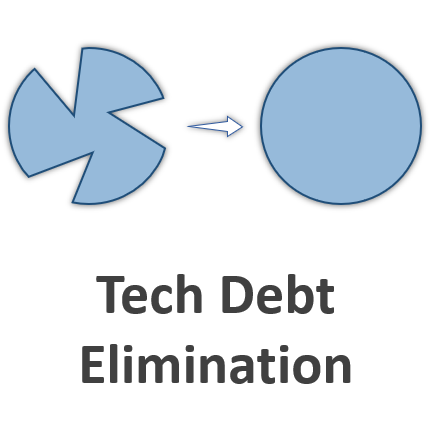
Tech debt: Developer don't write clean code - they write spaghetti code. The code is not object-oriented, no tests, no xunit-patterns. As a result it takes enormous amount of time to introduce new features, lots of bugs, takes a long time to maintain. Changing code is a nightmare, new features are hard to implement. Sometimes great leaders allow for eliminating tech debt. Eliminating tech debt is like paying of the mortgage
Almost like tech debt but less severe. The code is not necessarily horrible, but still not good enough. Refactoring this legacy code requires certain skills and patterns. This is different to: refactoring and different to tech-debt elimination. It's all about patterns on how to refactor bad code into clean code.